
The History of Camp Lejeune Water Contamination
This article is a living document. Regular updates may occur to fix errors and provide new evidence. Anything modified after the posting date will be added to the bottom with the revision data. If you have information to contribute, please fill out the contact form.
The Contamination That Should Never Have Happened
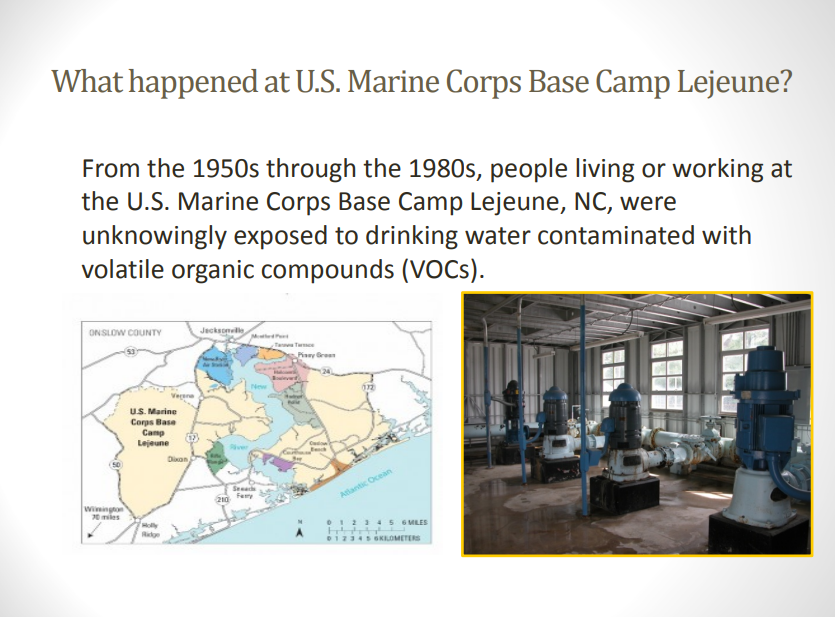
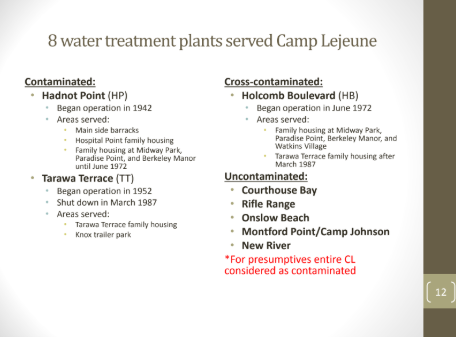
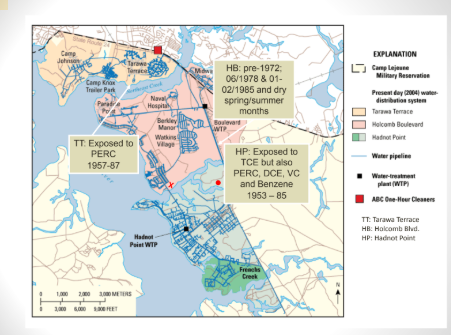
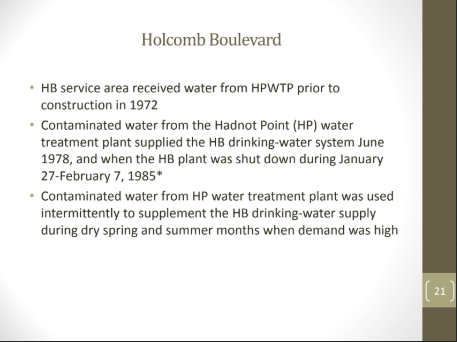
Starting in the early 1950s, the drinking water at Camp Lejeune, North Carolina, became heavily contaminated with dangerous industrial chemicals. The main systems affected were Tarawa Terrace and Hadnot Point.
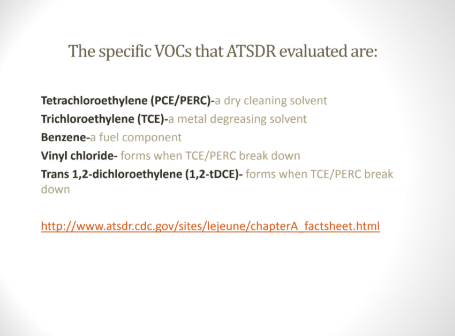
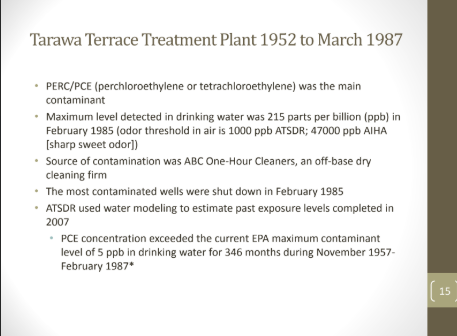
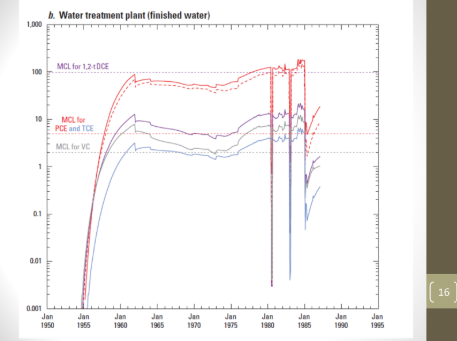
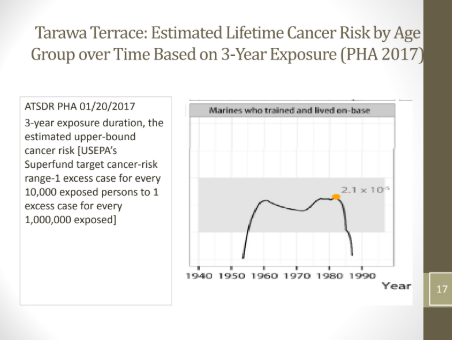
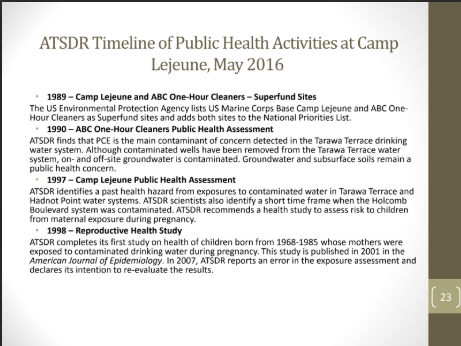
Tarawa Terrace: Perchloroethylene (PCE), a dry-cleaning solvent from the off-base ABC One-Hour Cleaners, seeped into the groundwater. People were drinking it as early as 1953.
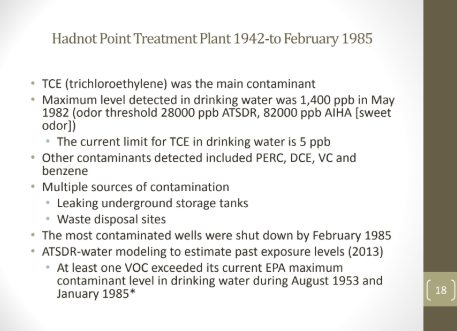
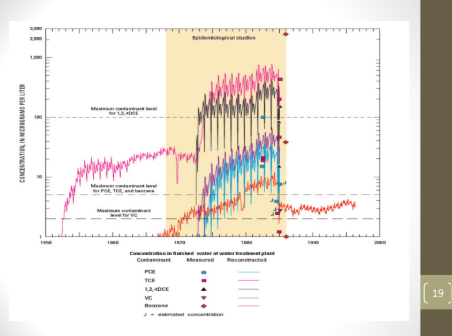
Hadnot Point: Trichloroethylene (TCE) from metal degreasing operations, benzene from leaking fuel tanks, and other volatile organic compounds (VOCs) poured into the water supply.
These chemicals reached levels hundreds or even thousands of times above safe limits. Up to one million Marines, family members, and civilian workers were exposed over more than 30 years.
The Cover-Up and Deadly Delays
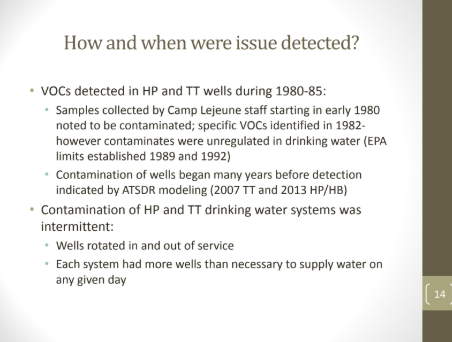
Tests in 1980–1982 started showing problems. By 1984–1985, the military finally confirmed the contamination and began shutting down the worst wells. The entire Tarawa Terrace system was eventually closed in 1987.
But here’s what makes people furious: instead of immediately notifying everyone and warning them about the health risks, the response was slow, minimal, and often dismissive. Many veterans and families only learned about their exposure decades later through media reports or their own research. Critics point to a pattern of stonewalling, downplaying risks, and failing to notify people promptly.
The base wasn’t designated a Superfund site until 1989, and real accountability took even longer.
Health Effects That Destroyed Lives
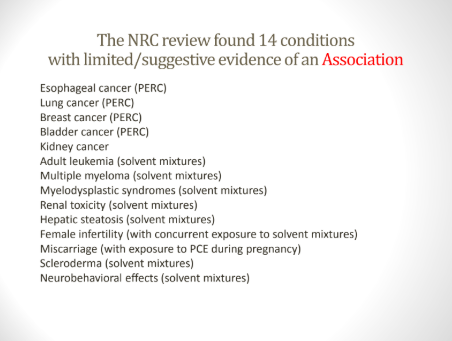
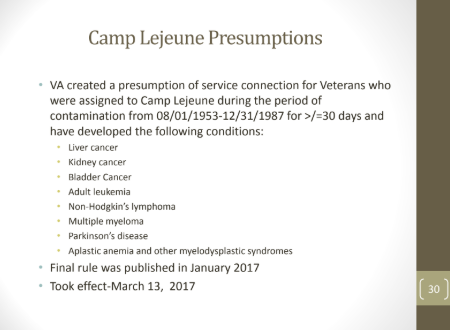
The chemicals in the water are known to cause serious, life-altering, and fatal illnesses. The VA now recognizes presumptive service connections for conditions including:
Adult leukemia
Bladder cancer, kidney cancer, liver cancer
Non-Hodgkin’s lymphoma
Parkinson’s disease
Aplastic anemia and other blood disorders
Miscarriages, birth defects, and reproductive issues
Many survivors and their families tell heartbreaking stories. One Marine’s young daughter, Janey Ensminger, was diagnosed with leukemia at age six and died. Other families experienced multiple miscarriages, children born with severe defects, or adults developing cancers years later.
People drank it, bathed in it, and cooked with it every single day — often while pregnant or raising small children.
Radioactive Dogs and Broader Environmental Mess
As if the chemical soup wasn’t enough, there was more. In 1980, while grading land for a parking lot, workers unearthed buried radioactive dog carcasses — beagles used in lab experiments, contaminated with strontium-90 (a radioactive isotope linked to bone cancer and leukemia). The site was an old Naval Research Laboratory dump full of lab waste labeled “Radioactive Poison.”
Other potential radioactive burials were investigated near rifle ranges. These incidents highlight the base’s history of sloppy, dangerous waste disposal practices that went far beyond just the drinking water.
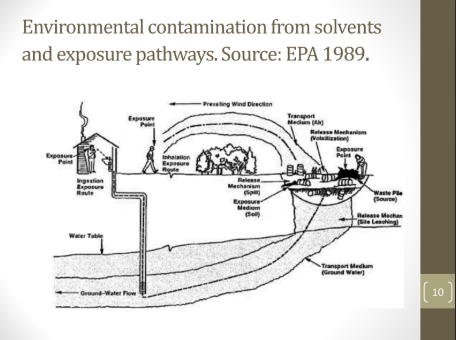
The environmental damage was widespread. Contaminated soil, groundwater, and sediment turned parts of the base into a Superfund priority. Cleanup has involved removing thousands of pounds of toxins, treating groundwater, and ongoing monitoring — but the legacy lingers.
Human Stories and Lingering Anger
Behind every statistic is a family that trusted the military to keep them safe. Veterans who deployed overseas and survived combat came home to bases only to watch their children get sick. Spouses who never served still suffer the consequences. Many fought for years — or decades — just to be believed and compensated.
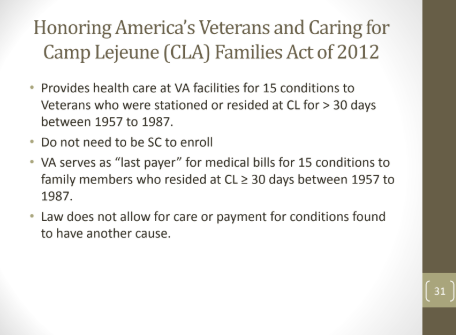
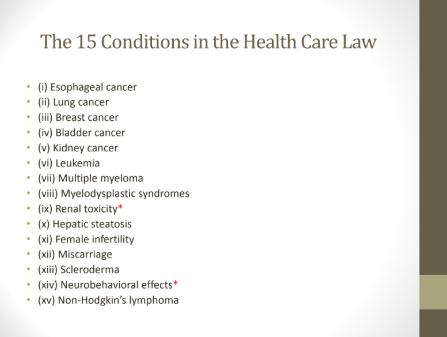
The 2012 Caring for Camp Lejeune Families Act and the 2022 Camp Lejeune Justice Act (part of the PACT Act) finally opened doors for healthcare and lawsuits, but for many, it came far too late.
So… What the Hell Was Going On?
It was a perfect storm of industrial negligence, poor waste management, bureaucratic delays, and a failure to prioritize the health of the very people sworn to protect the nation. The water contamination at Camp Lejeune isn’t ancient history — its effects are still being felt today by veterans, families, and their descendants.
If you or someone you love lived or worked at Camp Lejeune between 1953 and 1987, check the VA and ATSDR resources. You might be eligible for benefits and care you’ve earned the hard way.
This isn’t just a scandal. It’s a betrayal that never should have happened on American soil — especially not on a Marine base.
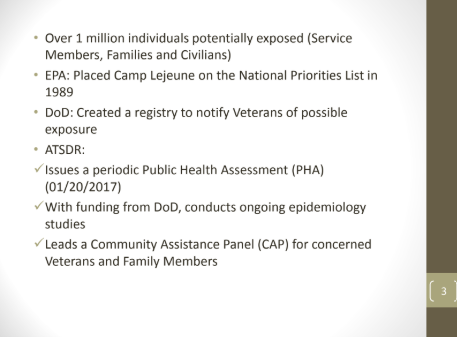
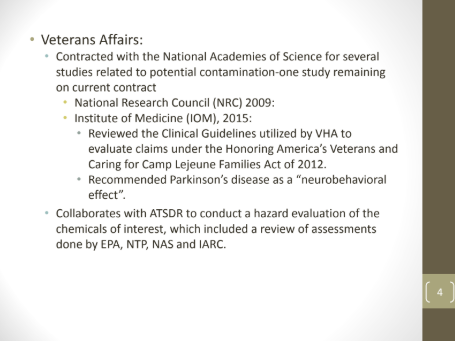
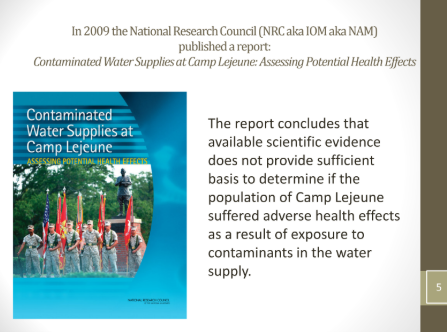
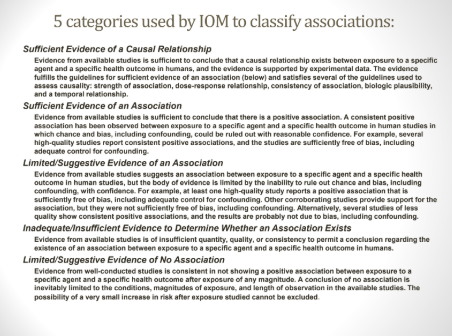
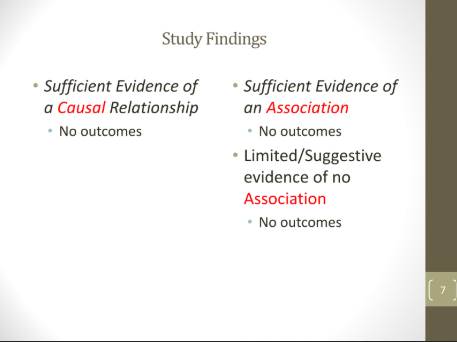
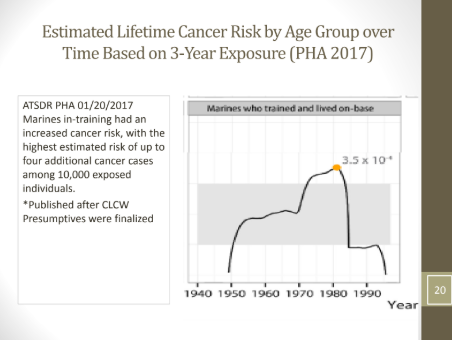
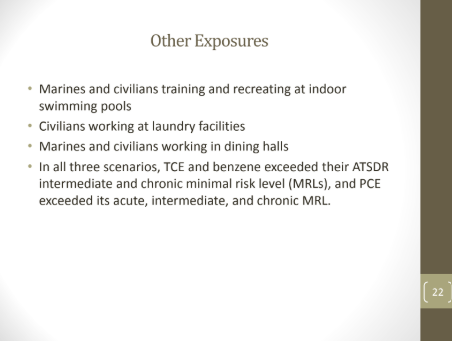
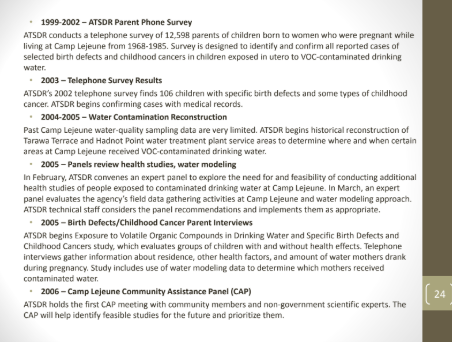
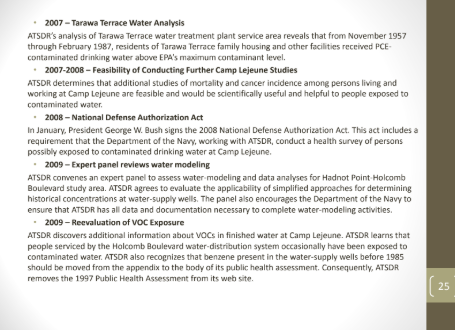
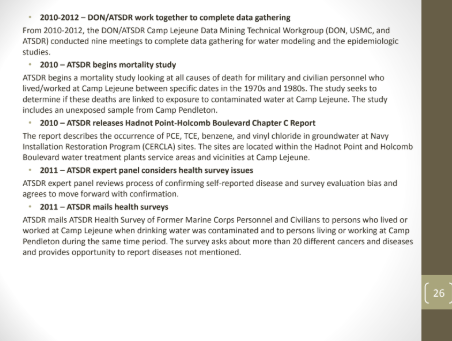
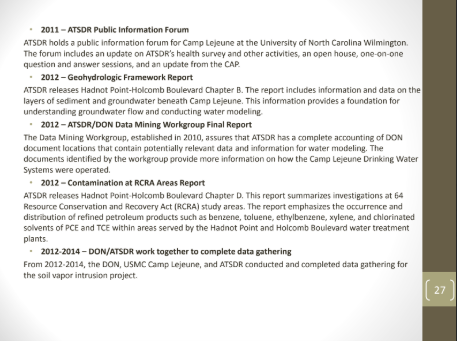
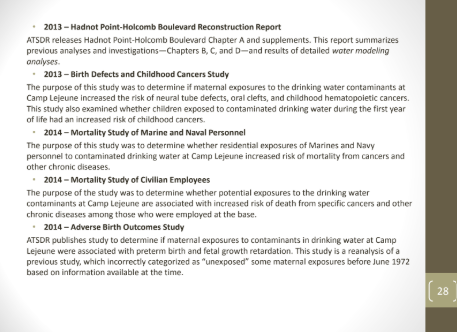
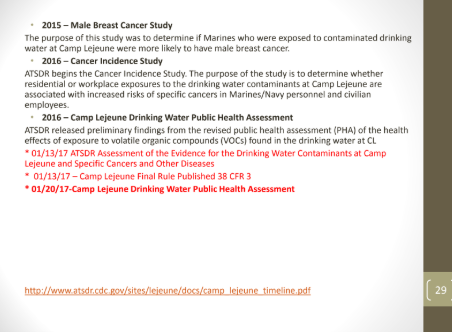
Below is a training offered by the base to explain the situation and mitigation efforts
Summarizing the Data
Data LLM Ai Tool can be accessed via this link https://notebooklm.google.com/notebook/f9843398-3127-4b5b-851b-46d5e7328472
The Archive is in possession of three major environmental studies done since the 1980s at C.L. These studies present hundreds of pages of information on test sites, chemicals tested, chemical levels, and remediation efforts. Using AI, a large language model was created to summarize the sheer volume of data in laymen’s terms.
Although the data is available, nearly no one can understand what it really means. In years past. it was incumbent on a specially trained environmental lawyer working with a team of experts to interpret this data and come to conclusions. Now thanks to AI, the average person can understand the data and it’s impact on their lives
That data is below:
Across several decades, researchers conducted major studies at Marine Corps Base Camp Lejeune to determine how historical activities—like fuel storage, waste disposal, and industrial work—affected the environment and the safety of the people living and working there.
Summary of the Studies
The investigations were divided into two main phases:
The Environmental Confirmation Study (Mid-1980s): This was a broad search to see if hazardous chemicals had leaked into the ground or water. Scientists tested soil, deep and shallow water, and even fish at 21 different sites.
The Vapor Intrusion Monitoring (2015): This more recent study focused on air quality inside buildings. Researchers checked to see if chemical vapors from contaminated underground water were rising through the soil and entering workspaces.
High-Level Overview of Site Locations
The studies targeted high-activity areas across the base, including:
Fuel Farms: Large storage areas for gasoline and oil, such as the Hadnot Point Fuel Farm and the Camp Geiger Fuel Farm.
Industrial Areas: Locations like Site 78, which housed maintenance shops, painting, and printing facilities.
Historical Disposal Sites: Places used as dumps for liquids, battery acid, and chemical waste, including the French Creek Liquids Disposal Area and the Rifle Range Chemical Dump.
Special Use Sites: Areas like a Former Nursery/Day Care Center and transformer storage lots.
Dry Cleaning Facilities: Specifically Site 88, where dry cleaning chemicals were used from the 1940s until 2004.
Chemicals and Levels (In Common Names)
The studies found several groups of harmful substances at varying levels:
Fuel Components (Benzene, Toluene, Ethylbenzene): Often found near fuel farms. A critical discovery at Site 22 (Industrial Area Tank Farm) revealed benzene levels at 380 ug/L in a drinking water well. This was more than 50 times higher than the safety limit of 6.6 ug/L.
Industrial Solvents (TCE and PCE): These common degreasers and dry-cleaning fluids were found in the water and air. While historic levels were high, 2015 testing showed that modern air filtration systems are successfully keeping these vapors out of indoor air.
Heavy Metals (Lead and Mercury): Lead was found at levels exceeding safety standards at French Creek and several fuel farms. Mercury was specifically detected in the soil and water near a marsh by the Photo Lab.
Pesticides (DDT): Common bug-killing chemicals were found in the soil at the former base nursery and various storage lots.
Risks in Layperson Terms
The primary concern for base residents and workers involves how these chemicals enter the body:
Drinking Contaminated Water: This was the biggest risk identified in the 1980s. Because chemicals like benzene and lead were found in deep wells, the study recommended immediately stopping the use of specific drinking water wells to prevent long-term health issues.
Breathing Hazardous Vapors: This is called "vapor intrusion." Even if you don't drink the water, chemicals buried underground can turn into gases and seep through the floors of buildings. The base installed special Vapor Intrusion Mitigation Systems (VIMS)—essentially giant fans and vents—to pull these gases away from buildings before people can breathe them.
Cancer Risk: The safety standards used (like the "NC VISL") are designed to be extremely cautious. They aim to ensure that the risk of developing cancer from these exposures remains incredibly low (less than a 1-in-100,000 chance) over a lifetime.
Environmental Spread: Because chemicals were found in fish tissue and creek sediments, there is a risk that the pollution has entered the local food chain, potentially affecting wildlife and anyone eating local fish.
What About Reports of Agent Orange in the Water?
These rumors have been circline for decades but so far, have not been proven definitively. That is not to say it did not happen, it cant be proven at this time. Specifically, USMC Veterans claim to have seen, or personally sprayed Agent Orange as an herbicide around the rifle ranges and base housing. Others claim to have knowledge of 55 gallon barrels of Agent Orange buried around Camp Lejeune, but these claims have not been verified.
When looking at data it is important to ask the right questions. No study will ever show the presence of “Agent Orange”. But they will confirm/deny the presence of the specific chemicals that make what is common known as Agent Orange. Agent Orange is a specific mixture of organochlorine herbicides (2,4-D and 2,4,5-T).Using the AI model, we can parse out whether or not those chemicals were in scope of the test, and what was found.
Summary of the Studies
The first major investigation, the Environmental Confirmation Study in the mid-1980s, focused on testing the "groundwater, soil, and surface water" at 21 sites to see if historical waste disposal had contaminated the drinking water supply. The second, a 2015 Vapor Intrusion study, looked at whether chemical vapors from contaminated groundwater were rising through the soil and entering the air inside base buildings.
High-Level Overview of Site Locations
Testing occurred at high-activity areas across the base, including:
Fuel Storage and Disposal: Such as the French Creek Liquids Disposal Area (Site 1) and the Industrial Area Tank Farm (Site 22).
Industrial and Waste Sites: Including the Industrial Area Fly Ash Dump (Site 24) and the Hadnot Point Burn Dump (Site 28).
Storage and Support Areas: Such as the Transformer Storage Lot 140 (Site 21) and a Former Nursery/Day Care Center (Site 2).
Chemical Detections vs. Safe Levels
The following table contrasts the amounts found in the 1980s study with the known safe levels (health-based criteria) used by the researchers at that time:
Chemical (Common Name)
Highest Level Found
Safe Level (Criterion)
Location of Exceedance
Benzene (Fuel component)
380 ug/L
6.6 ug/L
Site 22 (Industrial Tank Farm)
Lead (Heavy metal)
Exceeded Limit
50 ug/L
Site 1 (French Creek) & Site 22
DDT (Pesticide)
0.24 ug/L
Not listed (Exceeded)
Site 2 (Former Nursery)
Arsenic (Heavy metal)
Exceeded Limit
22 ng/L
Site 24 (Fly Ash Dump)
2,4,5-T (Agent Orange component)
8.9 mg/kg (in soil)
N/A (Verified Disposal)
Site 21 (Transformer Lot)
Important Note on Herbicides: Testing at Site 21 confirmed that 2,4,5-T (one of the two primary ingredients in Agent Orange) was present in the soil at levels ranging from 5.1 to 8.9 mg/kg. However, 2,4-D (the other ingredient) and related herbicides like Silvex were not detected above the laboratory's limits at those same locations.
Risks in Layperson Terms
Cancer and Long-Term Health: The "safe levels" used are extremely conservative, often set at a 1-in-100,000 risk level. This means if a person was exposed to that level for a lifetime, their risk of developing cancer would increase by only a tiny fraction.
Hazard Quotients (HQ): For non-cancer risks, scientists use an "HQ" of 0.2 to account for the fact that a person might be exposed to multiple chemicals at once, all affecting the same organ (like the liver).
Vapor Intrusion: Even if you aren't drinking the water, chemicals underground can turn into gas. The study notes that an "exceedance" of screening levels (like the NC VISLs) does not necessarily imply imminent danger, but it is a red flag that more investigation is needed to protect worker safety.
Environmental Spread: Contaminants like DDD and DDE (pesticide residues) were found in fish tissue and creek sediments, indicating the pollution had moved from the soil into the local food chain.
The above data shows clearly that at least some of the components of Agent Orange were found on CL, with some in high levels.